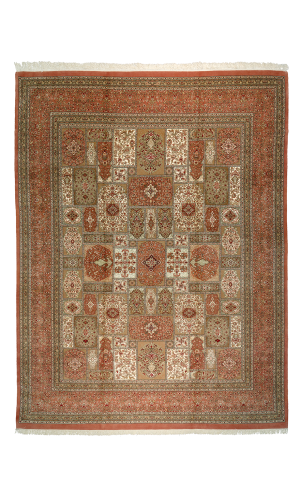
Panel design Persian rugs are distinguished by their distinct compartmentalized layouts, creating a visually captivating tapestry of patterns and motifs. These rugs offer a unique blend of artistry and history, making them prized possessions for collectors and a stunning addition to any interior.
Understanding Panel Design in Persian Rugs
Unlike all-over patterns, panel design divides the rug's field into sections or panels. These panels can be rectangular, square, or even more complex shapes, each with unique design elements. This creates a sense of order and structure while allowing for a rich diversity of motifs within a single rug. Some standard panel designs include:
- Garden Design (or Compartment Design): These rugs depict stylized gardens, often with waterways, trees, and floral motifs within each panel, evoking the image of a Persian paradise.
- Lattice Design: This design features a network of intersecting lines, creating diamond or lozenge-shaped panels filled with geometric or floral patterns.
These designs are not merely decorative; they often carry deep cultural significance, reflecting Persian beliefs, traditions, and artistic sensibilities. This rich cultural heritage is woven into every thread, making panel design Persian rugs more than just beautiful décor but a connection to a centuries-old tradition.
The Historical Roots of Panel Design Rugs
The origins of panel design in Persian rugs can be traced back centuries, with influences from various periods and regions. While precise dating is complex, evidence suggests that compartmented layouts were present in early Persian textiles and were further developed during the Safavid era (16th-18th centuries), a golden age for Persian art and culture. Cities like Isfahan and Kashan were renowned centers for rug weaving during this time, producing exquisite examples of panel design rugs. The Safavid era, in particular, was a time of great artistic and cultural flourishing in Persia, and this is reflected in the intricate designs and high-quality craftsmanship of the rugs produced during this period.
The Symbolism in Panel Designs
The motifs found within the panels often hold symbolic meaning. Garden designs, for example, represent the concept of paradise as described in the Quran, with flowing water symbolizing life and abundance, and lush vegetation representing prosperity and happiness. Animal motifs, such as birds or gazelles, can symbolize good fortune or grace. Floral elements, like the rose or the cypress tree, often represent love, beauty, or immortality. These symbolic representations enrich the artistic value of panel design rugs, making them more than just decorative objects. Understanding these symbols can deepen your appreciation for the rug's design and the cultural context from which it emerged.
The Craftsmanship Behind Panel Design Rugs
Creating a panel design for a Persian rug requires exceptional skill and meticulous attention to detail. Weavers carefully plan the layout and motifs, ensuring a harmonious balance between the panels. High-quality wool or silk is used, and natural dyes create rich, vibrant colors. The weaving process, typically done by hand using the Persian (Senneh) or Turkish (Ghiordes) knot, is incredibly time-consuming, with each knot meticulously tied. The complexity of the design and the fineness of the weave determines the time required to complete a rug, which can range from several months to several years. This level of craftsmanship is a testament to the dedication and skill of the artisans, and it's what makes each panel-designed Persian rug an actual work of art.
Decorating with Panel Design Persian Rugs
Panel design Persian rugs can add a touch of timeless elegance and cultural richness to any interior. Their structured layout makes them particularly well-suited for defining spaces within a larger room. They can complement traditional and contemporary décor, adding a focal point of visual interest. Consider the following tips:
- Color Coordination: Choose a rug that complements your room's color scheme.
- Furniture Placement: Place furniture to highlight the rug's design, perhaps aligning furniture with the lines of the panels.
- Room Size: Consider the size of the carpet in the room. A large panel design rug can anchor a spacious living room, while a smaller rug can add a touch of elegance to a hallway or bedroom.